
1 October, 2026
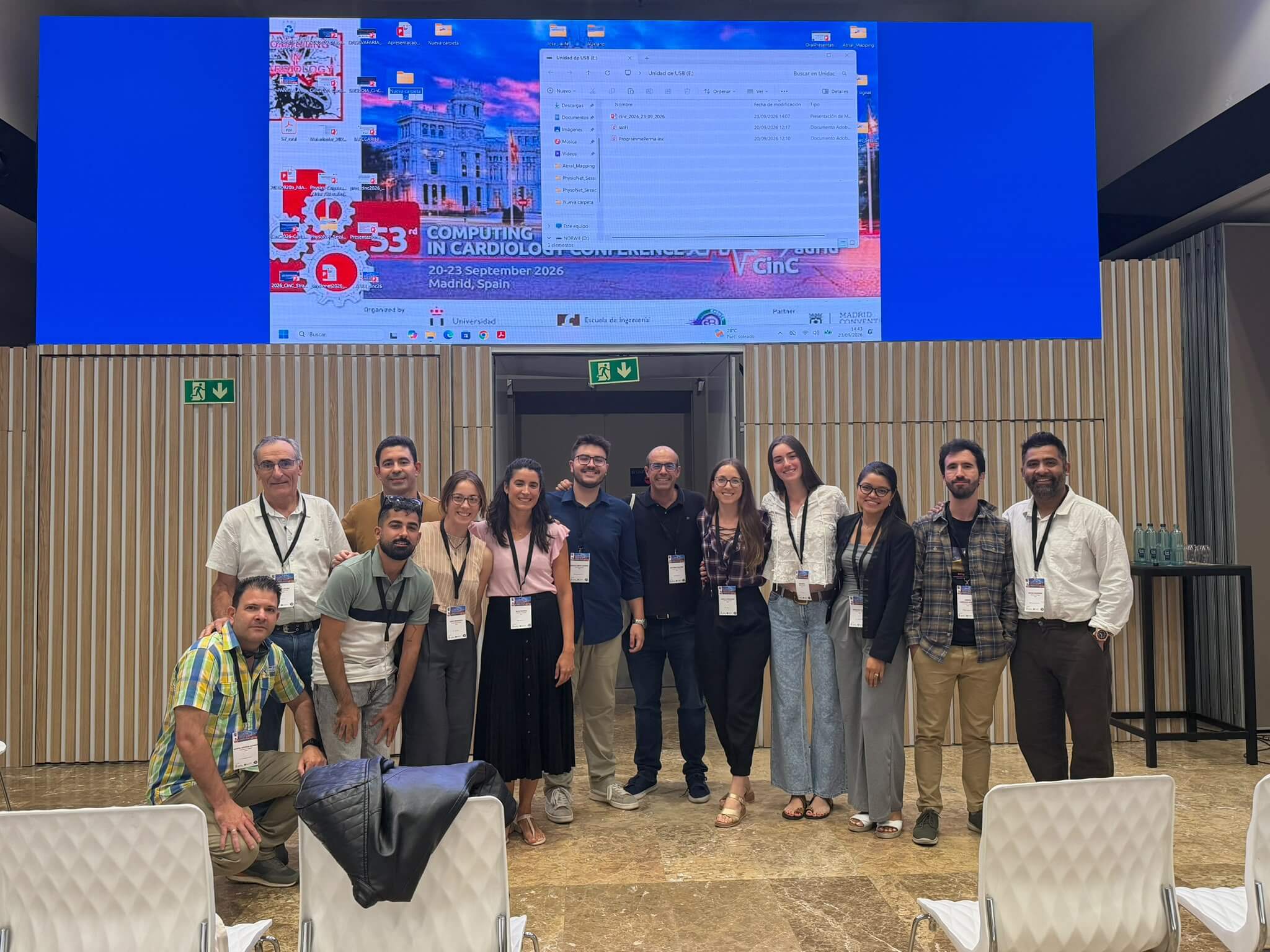
The annual conference took place in the Madrid from September 20 to 23. Find here the works presented there:
Adrián Carrasco: Towards Measuring Autonomic Dysfunction in Essential Tremor
The autonomic nervous system (ANS) plays a key role in regulating involuntary physiological processes and is known to be impaired in Parkinson’s disease (PD). In essential tremor (ET), however, evidence of autonomic dysfunction remains limited and inconsistent. This study investigates ANS responses to mental stress in ET, addressing gaps in prior research that has largely focused on physical stressors and yielded conflicting results.
Electrocardiogram (ECG) and electrodermal activity (EDA) signals were recorded from 5 PD patients, 5 ET patients, and 5 healthy controls under controlled conditions during rest and a cognitive stress task (Serial Subtraction Task). EDA signals were processed to obtain sympathetic activity, while standardized heart rate variability (HRV) metrics were computed from ECG recordings.
Results show reduced sympathetic activation in both PD and ET groups compared to controls, as reflected by lower EDA responses during mental stress. HRV findings were less consistent and did not clearly differentiate groups, potentially due to methodological limitations and the small sample size. Overall, the results support the presence of autonomic dysfunction in ET during mental stress, particularly affecting sympathetic activity. Further studies with larger samples are needed to better understand the nature of dysautonomia in ET.
Josseline Madrid: Latent ECG Signatures for the Identification of High-Risk Phenotypes in Coronary Artery Disease
ECG-based risk stratification tools enable large scale screening and targeted prevention for heterogeneous conditions such as coronary artery disease (CAD). ECG-derived deep learning embeddings via transfer learning have demonstrated their utility in cardiovascular disease detection and prediction, but their utility in identifying cardiovascular risk trajectories remains unexplored. We aimed to extract latent features from a pre-trained model to refine CAD risk phenotypes identified in previous work and evaluate their clinical interpretability.
Context latent features were extracted from 10-second, lead-I ECG recordings of 1,928 individuals with CAD from the UK Biobank using a Contrastive Predictive Coding model. The principal components (PCs) of these features were calculated and used as input to a k-means clustering model to determine distinct clusters in an unsupervised manner. Then, we analyzed the association between the identified clusters and incident outcomes (i.e., atrial fibrillation, AF, and heart failure, HF). Additionally, multivariable associations between the latent PCs and outcomes were analyzed, and Pearson correlations with traditional ECG parameters were performed to assess clinical interpretability.
The latent PCs identified two clusters of individuals with Cluster 2 having significant higher incidence of events for AF (8.9%) and HF (6.6%). Although the cluster-based risk stratification was less pronounced than that achieved with traditional ECG parameters, individual PCs demonstrated robust predictive ability for both outcomes. We identified specific and shared PCs across outcomes, suggesting a common subclinical latent risk profile. Furthermore, the PCs most predictive of AF and HF correlated with markers of slowed ventricular conduction and prolonged repolarization, both established signatures of electrical remodeling.
Our findings confirm that latent features hold discriminative value for cardiovascular outcomes in CAD populations. While these features provide risk information, future work should explore alternative clustering architectures to enhance the risk stratification using latent features.
Ángela Hernández: Learning Sex-specific Latent Factors from Single-Lead ECG Signals Using a Variational Autoencoder
Sex-related differences in electrocardiographic signals reflect underlying variation in cardiac electrophysiology and ECG morphology. Accounting for this variability is important for accurate interpretation and risk stratification. Variational autoencoders (VAEs) offer a powerful framework for ECG representation learning, yet entanglement limits the isolation of sex-related variability, which we address in this work through disentangled representation learning.
We developed a 1D convolutional FactorVAE using aligned median single-lead ECG beats (lead I, N = 54,773) from the UK-Biobank cohort as an input. Continuous variables (age, body mass index, systolic and diastolic blood pressure) were provided to the decoder as conditioning inputs, while sex was excluded from training. The encoder mapped ECG signals to a 32 latent dimensions (LD) space. The model was trained with a variational objective using a Gaussian prior p(z) = N(0, I), combining reconstruction loss and KL divergence (β = 1), while a discriminator enforced independence across latent dimensions via a total correlation penalty (γ = 3). Interpretability was explored using per-dimension KL to identify active latent dimensions (KLi > 0.1), latent traversals, and correlation analyses to assess associations.
The model accurately reconstructed ECG signals (MAE = 0.037 mV) while maintaining partial disentanglement (KL loss = 25 nats), with 11 active LD. Specifically, LD number 14 exhibited the strongest correlation coefficient with sex (|r| = 0.29). Latent traversal along this LD induced changes in ST segment and T-wave amplitudes (|r| = 0.60 and 0.78, respectively), consistent with the literature, suggesting that the model captured sex-specific electrophysiological characteristics. These findings indicate that sex-related variability is a dominant and learnable factor in ECG signals, which can be isolated without explicit supervision.
FactorVAE can uncover sex-specific latent structure in ECG data, highlighting its potential to capture relevant female-specific factors, such as menopausal status.
João Paulo: T-Wave Alternans from Holter Recordings to Stratify Patients with Chagas Cardiomyopathy
In this work, we evaluate and characterize the predictive potential of T-wave alternans (TWA) indices for sudden cardiac death (SCD) in a population of patients with Chronic Chagas Cardiomyopathy (CCC) with a 4-year follow-up. TWA waveforms are estimated in processable 128-beat segments using a combination of periodic component analysis (πCA) and the Laplacian likelihood ratio (LLR) method. Then, the Index of Median Alternans (V_IMA) is computed as the mean absolute voltage of the median alternans waveform. The index is computed from the complete recording and in a cumulative heart-rate (HR) strategy, from 40 to 140 bpm, restricting to those k:th segments with mean heart rate (HR_k) lower than a particular HR_b, named V_IMA_C(HR_b). SCD patients showed significantly higher values of V_IMA (0.93 vs 0.71, p=0.009) and, even more significantly, higher values of V_IMA_C(77.5) than survivor patients (0.92 vs 0.67, p = 0.006). Univariate Cox analysis showed that V_IMA and V_IMA_C(77.5) are significantly associated with SCD risk, (HaR = 2.36, 95% CI: 1.44-3.87, p=0.001) and (HaR = 2.46, 95% CI: 1.48-4.08, p < 0.001), respectively. In conclusion, TWA indices, specially computed at HR < 77.5 bpm, are strongly associated with SCD in Chagas patients.
Sara Artal: Self-Supervised ECG Foundation Models for Enhanced Detection of Paroxysmal Atrial Fibrillation
Paroxysmal atrial fibrillation (PAF) is a common intermittent supraventricular arrhythmia that is challenging to detect. The electrocardiogram (ECG) is a low-cost, non-invasive tool suitable for its diagnosis. Recently, neural networks (NNs) have emerged as a promising approach for detecting PAF from ECG signals. However, their adoption remains limited by the scarcity of high-quality labeled data. This study evaluates the impact of key design choices in ECG foundation models (ECG-FMs) on representation quality and downstream performance for PAF detection under limited data conditions. First, a convolutional NN (CNN) was implemented for the detection of PAF from ECGs in sinus rhythm. Then, public ECG datasets were collected, yielding 1,784,071 ECG recordings. Using these data, six ECG-FMs were pre-trained in a self-supervised learning (SSL) manner via contrastive predictive coding (CPC) to assess the influence of dataset size (N), learning rate (Lr), batch size (BS), and data augmentation strategies. Incorporating representations from variant CPC-5 (larger N, lower Lr, larger BS, and augments) into a simplified CNN improved the area under the curve from 0.606 to 0.716 and raised specificity from 0.407 to 0.573. These results show that training design choices, particularly dataset size and Lr, are decisive for SSL performance.
Nicolás Ubieto: T-Wave Alternans Evolution During Hemodialysis Treatments and Correlation with [K+] and [Ca2+] Concentrations
End-stage renal disease (ESRD) patients requiring hemodialysis (HD) treatment experience rapid blood electrolyte fluctuations that can trigger ventricular repolarization instability, increasing arrhythmia vulnerability and cardiovascular risk. T-wave alternans (TWA) may serve as a non-invasive marker of such instability. In this work, we assessed the correlation between TWA amplitude and variations in serum potassium [K+] and calcium [Ca2+] concentration levels in ESRD patients during an HD session.
A total of 29 48-hour Holter ECGs from ESRD patients (12 leads, sampling frequency 1000 Hz), including a complete HD session together with a set of synchronous hourly-collected blood samples (before, 3 during the HD and at the end of the session), were analyzed. The index of median alternans (IMA), quantifying the average absolute TWA amplitude, was measured in consecutive 1-hour intervals using a fully automated method based on periodic component analysis (πCA) and the Laplacian likelihood ratio test method. Intrapatient Pearson’s correlation coefficient (r) between IMA and both [K+] and [Ca2+] ionic concentrations along the HD session was assessed.
Analysis of the temporal evolution of IMA during the HD demonstrated a direct correlation with [K+] variations yielded a result of (median [Q1,Q3]) r = 0.79 [0.32,0.91]. Moreover, variations in [Ca2+] level showed an inverse association with IMA with r = -0.59 [-0.82,-0.08].
TWA amplitude, measured by IMA, is responsive to the rapid intradialytic fluctuations of serum [K+] and [Ca2+]. Since these electrolyte shifts directly drive repolarization instability, IMA emerges as a promising non-invasive biomarker for real-time monitoring of arrhythmic risk in ESRD patients.
Sofia Romagnoli: ECG Phenotypes Identified in Brugada Syndrome Using Unsupervised Clustering
Brugada syndrome (BrS) is a heritable syndrome predisposing individuals to fatal arrhythmias, cardiogenic syncope and cardiac arrest. Mathematical modelling of QRS morphology combined with unsupervised clustering may identify distinct electrophysiological phenotypes and improve the understanding of conduction abnormalities in BrS.
We analyzed 24-hour high-precordial Holter ECG recordings from 118 BrS patients and 44 healthy controls. Median QRS complexes from consecutive 30-minute windows were mathematically modelled through four Hermite functions. The resulting morphological features (Hermite base width and the four coefficients) were spatially reduced by principal component analysis across leads and clustered using K-means. Cluster temporal stability was evaluated using cluster dominance, transition rate, entropy and feature variance.
Clustering identified two QRS phenotypes in BrS. Cluster 2 showed slower conduction when quantified by the propagation progression time. Although, QRS-based clustering alone did not stratify risk (high-risk BrS in Cluster-1 27% vs Cluster-2 37%). When assigning healthy controls to clusters, they fitted into Cluster 1, except for one subject. Compared to BrS patients, controls presented a higher temporal stability with lower transition rate among clusters, lower entropy, and higher persistence. Notably, BrS patients presented the highest feature variance (1.74[0.76;3.34] vs 6.05[2.46;11.06], p-value <0.001), and thus an increased intra-subject morphological variability of the QRS-complex during the 24 hours.
The presented clustering strategy identified two QRS phenotypes in BrS syndrome, one corresponding with healthy QRS morphology and the other probably linked to QRS variability and transient changes potentially linked to type-I pattern manifestation. Although, QRS-based clustering alone did not stratify risk, indicating that integration with ST-segment and T-wave analysis may better capture phenotypic expression and support subgroup-specific modeling.
Sofia Romagnoli: Multimodal PSG-Based Prediction of Cognitive Impairment Using an Interpretable XGBoost Framework
Early identification of cognitive impairment (CI) is essential for mitigating the progression of neurodegenerative diseases. This work presents REMedy’s contribution to the George B. Moody PhysioNet Challenge 2026, a physiology-informed XGBoost framework to predict CI diagnosis 1-6 years after polysomnography (PSG) recordings.
Given the importance of interpretability for understanding physiological mechanisms and enabling clinical translation, a preliminary XAI-based analysis combining neural-network attention and Grad-CAM was used to identify informative PSG modalities. Together with signal availability and physiological plausibility, this analysis guided the selection of 244 raw features, spanning age and sex, respiratory dynamics, sleep-EEG measures, heart-rate variability and fragmentation. To account for age-related confounding, ECG-derived biological age and the biological–chronological age gap were incorporated alongside chronological age. To handle heterogeneous channel availability, seven XGBoost classifiers were trained for all EEG, ECG, and respiration signal availability combinations. Hyperparameters were optimized using age-conditioned AUROC as the search score, in a five-fold stratified nested cross-validation with fold-specific preprocessing. Hyperparameters selected across the outer folds were combined into consensus values and subsequently used to fit the final ensemble on the complete training set. For each recording, the classifier matching the available physiological modalities was selected dynamically. Binary predictions were obtained using a probability threshold optimized by maximizing the F1-score.
The difference between AUROC (0.837) and age-conditioned AUROC (0.636) suggests that that model discrimination may rely on age confounding caused by training data imbalances. During model development, a revised pipeline obtained stronger leave-one-site-out performance (age-conditioned AUROC 0.520 ±0.007 vs 0.626 ± 0.076) across the available training cohorts but lower performance (0.614) on the hidden validation set, indicating that performance on a specific external cohort and robustness to site shift are not equivalent, whereas clinical translation will require broader multicenter validation to establish robustness across unseen acquisition sites and patient populations.
Julia Ramírez: Disentanglement of Demographic and Genetic Factors on the ECG Morphology
Demographic traits and polygenic risk scores (PRS) shape electrocardiogram (ECG) morphology, making their disentanglement crucial for cardiovascular disease (CVD) modeling. However, weak PRS effects emerge primarily at distribution extremes, posing a methodological challenge. We developed a deep learning autoencoder (AE) to isolate these factors, yielding a confounder-corrected ECG representation (zrest) while tackling extreme genetic variations.
We analyzed median heartbeats from the 8 independent leads from 40,039 healthy UK Biobank individuals. The AE used auxiliary classifiers to decompose signals into latent vectors for sex, age, and genetic risk (QT, QRS, PR-interval PRSs), alongside a purified zrest capturing all unexplained morphology. We solved the PRS challenge via selective masking, restricting the model’s training on genetic effects to extreme percentiles (<5th, >95th).
Target predictions were highly accurate (Sex AUC=0.971; Age MAE=5.494; PRS AUCs: QT=0.865, QRS=0.785, PR=0.801). Conversely, non-target predictions (e.g., sex from zage) fell to random level (AUC ≈ 0.50) and failed age regression, confirming minimal information leakage.
Overcoming the extreme nature of PRS, our AE disentangles these confounders to provide zrest, a confounder-free morphological baseline essential for unbiased CVD risk assessment.
Nayan Wadhwani: Unsupervised Photoplethysmography Signal Quality Assessment using Contrastive Learning and Persistent Homology
Photoplethysmography (PPG) enables unobtrusive cardiovascular monitoring, but motion artifacts, poor contact, and low perfusion can corrupt downstream estimates without obvious visual warning. We investigated an unsupervised signal quality assessment framework based on contrastive representation learning and persistent homology. A SimCLR model with a one-dimensional residual encoder was trained on 61363 unlabeled 8-second PPG segments from 120 subjects. We evaluated HDBSCAN clustering across learned embeddings, topology-only spaces, and combined feature spaces. Cluster quality was validated post hoc using simultaneous ECG-derived heart rate, without using ECG during model training or clustering. In the final validated experiment, standardized 12-dimensional dual-topology features from 50000 synchronized PPG segments produced three clusters and 818 unassigned segments. The dominant cluster contained 48784 segments and had a median absolute ECG-PPG heart-rate error of 0.21 BPM (IQR 0.09–0.49 BPM) across 44341 valid HR pairs. A small artifact cluster contained 137 segments and had a median absolute ECG-PPG heart-rate error of 51.48 BPM (IQR 48.00–54.85 BPM). Grid-search experiments showed that high silhouette scores alone were insufficient, because some high-silhouette configurations discarded many segments. These results suggest that a self-supervised topological PPG manifold can isolate severe low-quality segments while preserving a large high-quality cluster.
Hugo Hernández: Slow conduction corridors and conduction velocity predict atrial fibrillation recurrence after first ablation
Atrial fibrillation (AF), the most prevalent sustained arrhythmia, is linked to an elevated risk of stroke, heart failure, and mortality. This study investigated whether conduction velocity (CV) measurements derived from preablation electroanatomical maps (EAM) predict long-term AF recurrence following a first ablation procedure (n=45). In univariate Cox analysis, a lower median CV was associated with a higher risk of recurrence (hazard ratio (HR): 2.08 per 0.1 m/s decrease, p = 0.049). Consistently, after dichotomization, a median CV < 0.66 m/s was significantly associated with an increased recurrence risk (HR: 4.69, p = 0.016). Slow conduction corridors (SCCs), defined as regions with CV < 0.5 m/s, provided additional prognostic value. Within SCCs, both a larger low-voltage zone area (HR: 5.11, p = 0.010) and greater unipolar signal fragmentation (HR: 5.20, p = 0.009) were significantly associated with AF recurrence. Multivariate analysis confirmed median CV as an independent predictor of AF recurrence, alongside SCC-related structural and voltage features (HR: 8.25, p = 0.007, and HR: 6.37, p = 0.011, respectively). These findings identify CV-based metrics as robust predictors of AF recurrence and support their clinical integration to enhance patient selection and ablation outcomes.
For further information: https://cinc2026.org/